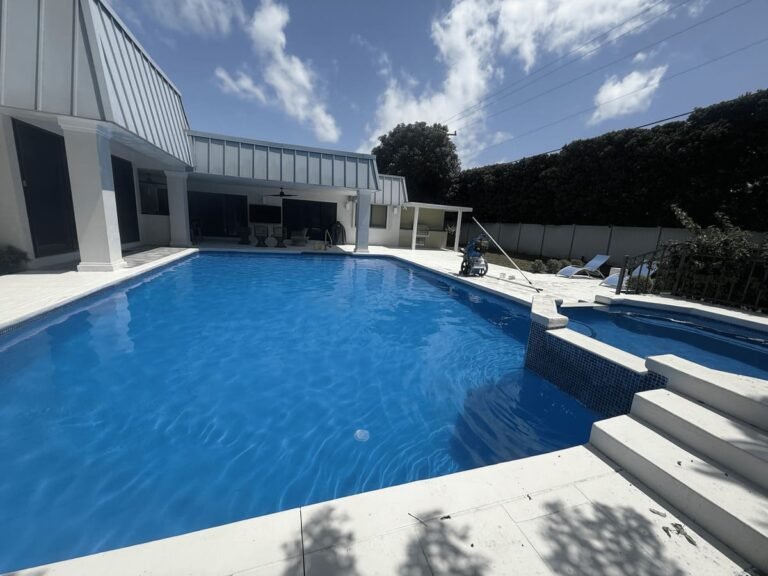

Pool Cleaning Service in Deerfield Beach, FL: How Often Should Your Pool Be Serviced?
Owning a swimming pool in Deerfield Beach, Florida, is one of the best ways to enjoy South Florida’s warm weather and outdoor lifestyle. However, keeping your pool clean, properly balanced, and ready for swimming requires consistent maintenance throughout the year.
Unlike swimming pools in colder regions, pools in Deerfield Beach are exposed to high temperatures, intense sunlight, heavy rainfall, tropical storms, and year-round swimming activity. These environmental conditions can quickly affect chlorine levels, water chemistry, filtration performance, and overall pool cleanliness.
For many homeowners, hiring a professional pool cleaning service in Deerfield Beach, FL, is the most convenient way to maintain clear water, prevent algae growth, protect expensive pool equipment, and reduce unexpected maintenance problems.
But how often should your swimming pool be professionally serviced? Is weekly pool cleaning enough? What happens if you skip maintenance for several weeks? And how do you choose the right pool cleaning company in Deerfield Beach?
This complete homeowner guide explains everything you need to know about pool maintenance frequency, professional cleaning services, seasonal maintenance requirements, common pool problems, and the benefits of regular pool care in Deerfield Beach and throughout Broward County.
How Often Should You Clean Your Pool in Deerfield Beach?
For most residential swimming pools in Deerfield Beach, weekly professional pool cleaning is a practical starting point for maintaining consistent water quality and preventing common maintenance problems.
However, the ideal frequency depends on several factors, including pool size, surrounding landscaping, swimmer activity, water temperature, filtration equipment, and seasonal weather conditions.
Even when a professional visits once a week, homeowners may need to perform basic maintenance between appointments, particularly during periods of heavy rain, intense heat, or frequent swimming.
Why Weekly Pool Cleaning Is Recommended
Weekly pool maintenance provides an opportunity to identify and correct small problems before they develop into larger issues.
During a typical maintenance visit, a professional technician can test the water, adjust chemical levels, remove debris, brush pool surfaces, inspect filtration performance, and check visible equipment for potential problems.
Regular visits also make it easier to monitor changes in water chemistry over time.
For example, a pool that consistently experiences declining chlorine levels may have excessive organic contamination, inadequate stabilizer, or another issue requiring attention.
Addressing these conditions early is generally easier than recovering a neglected swimming pool.
Can You Clean Your Pool Every Two Weeks?
Biweekly professional pool cleaning may be workable for certain low-use pools when the homeowner performs appropriate testing, chemical adjustments, debris removal, and equipment monitoring between visits.
However, relying exclusively on professional maintenance every two weeks may be insufficient for many outdoor pools in South Florida.
Chlorine levels can change rapidly because of sunlight, rain, warm temperatures, and swimmer activity.
A pool that appears clean at the beginning of a two-week period may develop sanitation or filtration problems before the next scheduled appointment.
For homeowners who prefer minimal involvement in pool maintenance, weekly professional service is generally a more practical option.
When Does a Pool Need More Frequent Maintenance?
Some swimming pools require additional attention beyond weekly service.
Pools surrounded by trees, exposed to construction debris, used frequently by large families, or affected by recurring algae may need more frequent cleaning and water testing.
Additional maintenance may also be necessary after tropical storms, prolonged power outages, equipment failures, or significant changes in water chemistry.
Why Pool Maintenance Is Different in Deerfield Beach, Florida
Deerfield Beach is located in Broward County, where the subtropical climate creates year-round pool maintenance challenges.
Unlike seasonal pools in northern states, many South Florida swimming pools remain operational throughout the entire year.
This means chemical management, circulation, filtration, and equipment maintenance cannot simply stop when summer ends.
High Temperatures Increase Pool Maintenance Demands
Warm pool water can encourage algae and microbial growth when sanitizer levels are inadequate.
During Florida’s hottest months, swimming pools may also experience increased chlorine demand because of higher temperatures, more frequent swimming, and additional organic contamination.
Maintaining appropriate sanitizer levels is essential for preventing algae outbreaks and supporting safe swimming conditions.
Intense Sunlight Can Reduce Chlorine Levels
Outdoor pools in Deerfield Beach receive substantial ultraviolet exposure.
Sunlight can break down chlorine, reducing the amount available for sanitation.
Cyanuric acid, commonly called pool stabilizer, helps protect chlorine from rapid UV degradation.
However, excessive cyanuric acid can also make chlorine management more difficult, so stabilizer should be monitored rather than added automatically.
Heavy Rainfall Affects Water Chemistry
South Florida’s rainy season can create significant changes in swimming pool conditions.
Heavy rainfall may dilute chemicals, raise the water level, introduce contaminants, and affect water balance.
Strong winds can also carry leaves, insects, dirt, pollen, and other organic material into the pool.
After significant rainfall, homeowners should remove debris, inspect circulation, and test the water before making chemical adjustments.
Landscaping Can Increase Debris
Many residential properties in Deerfield Beach feature palm trees, tropical plants, shrubs, and extensive landscaping.
Leaves, flowers, seeds, insects, and other organic material can enter the pool and increase cleaning requirements.
Pools surrounded by vegetation may need more frequent skimming, basket cleaning, and filter maintenance.
What Does a Professional Pool Cleaning Service Include?
A professional pool cleaning service should involve more than removing leaves from the surface.
Comprehensive maintenance combines physical cleaning, chemical management, filtration monitoring, and basic equipment inspection.
The exact tasks depend on the company and service agreement, so homeowners should confirm what is included before hiring a provider.
Pool Water Testing
Water testing is one of the most important parts of professional pool maintenance.
A technician may measure free chlorine, pH, total alkalinity, calcium hardness, cyanuric acid, and other parameters depending on the pool.
Saltwater pools may also require salt concentration testing and monitoring of the chlorine generator.
Testing helps determine which adjustments are necessary and reduces the risk of unnecessary chemical use.
Chemical Balancing
After testing, chemicals should be adjusted according to actual water conditions.
Proper chemical balance supports effective sanitation while helping prevent algae growth, scaling, corrosion, staining, and uncomfortable swimming conditions.
Professional technicians should consider how different chemical parameters interact rather than treating each measurement independently.
Pool Surface Skimming
Surface skimming removes leaves, insects, flowers, grass, and floating debris.
Removing organic material before it sinks reduces the amount of contamination that must be handled by the filtration system and sanitizer.
Brushing Pool Walls and Steps
Pool surfaces can accumulate algae, dirt, and organic buildup.
Regular brushing helps remove contaminants from walls, steps, benches, corners, and areas with limited circulation.
The correct brushing equipment should be selected according to the pool’s surface material.
Pool Vacuuming
Dirt and sediment that settle on the pool floor may require vacuuming.
The frequency depends on surrounding vegetation, weather, swimmer activity, and whether the pool has an automatic cleaning system.
Cleaning Skimmer and Pump Baskets
Skimmer and pump baskets collect debris before it travels through the circulation system.
When these baskets become clogged, water flow can decrease and filtration efficiency may suffer.
Regular cleaning helps maintain proper circulation and reduce unnecessary stress on the pump.
Pool Filter Monitoring
The filter removes suspended particles from circulating water.
Professional technicians should monitor filter pressure, water flow, and filtration performance to determine when cleaning or backwashing is necessary.
Cartridge, sand, and diatomaceous earth filters have different maintenance procedures.
Basic Equipment Inspection
Routine service visits provide an opportunity to identify developing equipment problems.
A technician may notice visible leaks, unusual pump sounds, air entering the circulation system, weak return flow, abnormal filter pressure, or damaged components.
Early identification can help prevent minor issues from developing into more expensive repairs.
Weekly Pool Service vs Monthly Pool Cleaning
Homeowners sometimes consider reducing maintenance frequency to save money.
However, weekly maintenance and monthly cleaning serve very different purposes.
Benefits of Weekly Pool Service
Weekly service provides consistent attention to water chemistry, debris, filtration, and equipment.
It is particularly useful for outdoor pools exposed to South Florida’s changing weather conditions.
Regular maintenance can also help reduce the likelihood of severe algae outbreaks and large chemical corrections.
Why Monthly Cleaning May Not Be Enough
Monthly professional cleaning alone is generally not sufficient for many residential swimming pools in Deerfield Beach.
Water chemistry can change significantly within a few days, especially during hot weather or periods of heavy swimming.
A monthly professional visit may still be useful when homeowners perform the necessary maintenance themselves between appointments.
However, leaving an outdoor pool unattended for an entire month can create unnecessary sanitation and equipment risks.
How Often Should Pool Chemicals Be Checked?
Water chemistry should be monitored more frequently than many homeowners realize.
Even when professional cleaning is scheduled weekly, certain chemical parameters may require additional testing between visits.
Chlorine and pH Testing
Free chlorine and pH are among the most important routine measurements.
Testing frequency should reflect pool use, weather, sanitizer system, and water conditions.
During periods of extreme heat, heavy rainfall, or frequent swimming, additional testing may be necessary.
Total Alkalinity
Total alkalinity helps stabilize pH.
If alkalinity becomes too low, pH may fluctuate rapidly. Excessively high alkalinity can make pH control more difficult.
Calcium Hardness
Calcium hardness influences overall water balance and the potential for scale formation or aggressive water conditions.
The appropriate target depends on pool surface, equipment, and other water chemistry parameters.
Cyanuric Acid
Cyanuric acid protects chlorine from sunlight, but excessive levels can reduce chlorine’s sanitizing activity.
Periodic testing is especially important when stabilized chlorine products are used regularly.
Pool Maintenance During Deerfield Beach’s Rainy Season
Rainy-season pool maintenance requires additional attention because water conditions can change quickly.
Repeated thunderstorms may introduce debris, alter water chemistry, and increase filtration demands.
Remove Debris After Heavy Rain
Leaves, branches, dirt, and other debris should be removed as soon as conditions are safe.
Allowing organic material to remain in the water can increase sanitizer demand and contribute to clogged baskets or filters.
Test the Water Before Adding Chemicals
Not every rainstorm requires shock treatment.
Testing chlorine, pH, and other relevant parameters helps determine whether chemical adjustments are necessary.
Adding chemicals without testing can waste money and create additional imbalance.
Check the Pool Water Level
Heavy rainfall may raise the water above the normal operating level.
An excessively high water level can interfere with skimmer performance.
Avoid completely draining the pool, especially when groundwater levels are elevated after heavy rain.
Pool Cleaning During the Florida Summer
Summer can be one of the most demanding periods for swimming pool maintenance in Deerfield Beach.
High temperatures, intense sunlight, frequent thunderstorms, and increased swimmer activity can occur simultaneously.
Monitor Sanitizer Demand
Chlorine may be consumed more rapidly during periods of heavy swimming or increased organic contamination.
Maintaining an appropriate sanitizer concentration helps prevent algae and water-quality problems.
Maintain Proper Circulation
Circulation distributes sanitizer and moves suspended particles toward the filtration system.
Clogged baskets, dirty filters, malfunctioning pumps, and blocked plumbing can reduce circulation efficiency.
Increase Cleaning When Necessary
Pools used frequently during summer may accumulate additional sunscreen, body oils, dirt, and other contaminants.
Extra brushing, skimming, vacuuming, or water testing may be appropriate.
Do Pools in Deerfield Beach Need Maintenance During Winter?
Yes. Swimming pools in Deerfield Beach generally require maintenance throughout the year.
Although cooler temperatures and reduced swimming activity may lower certain maintenance demands, pools still need appropriate sanitation, circulation, filtration, and cleaning.
Winter Maintenance May Be Different
During cooler periods, chlorine demand and debris accumulation may change.
However, homeowners should continue testing water chemistry and monitoring equipment rather than assuming that winter conditions eliminate maintenance requirements.
Why Year-Round Maintenance Matters
Neglecting a pool during winter can allow algae, scale, debris, and equipment problems to develop.
Maintaining a consistent routine helps prevent larger corrective treatments when swimming activity increases again.
Common Pool Problems in Deerfield Beach
Understanding common pool problems can help homeowners recognize when additional maintenance is necessary.
Green Pool Water
Green water commonly indicates algae growth.
Low sanitizer, inadequate circulation, poor filtration, warm temperatures, and organic contamination can contribute to algae outbreaks.
Treatment may require chemical correction, brushing, filtration, and repeated cleaning.
Cloudy Pool Water
Cloudiness can result from suspended debris, inadequate sanitizer, chemical imbalance, algae, or filtration problems.
The underlying cause should be identified before adding unnecessary treatment products.
Recurring Algae on Pool Walls
Algae may develop in corners, on steps, or in areas with limited circulation.
Consistent brushing and proper sanitizer management help reduce recurring buildup.
Pool Pump Not Working Properly
A malfunctioning pump can prevent water from circulating effectively.
Potential causes include clogged baskets, air leaks, damaged components, electrical problems, or plumbing restrictions.
High Pool Filter Pressure
A filter that becomes loaded with debris may develop elevated pressure.
Cleaning should follow manufacturer recommendations and the filter’s normal operating pressure.
Pool Losing Water
Evaporation and splash-out cause some water loss.
However, persistent or excessive water loss may indicate a leak in the pool structure, plumbing, skimmer, or equipment.
How Much Does Pool Cleaning Service Cost in Deerfield Beach?
The cost of professional pool cleaning in Deerfield Beach depends on the specific pool and services provided.
A smaller, well-maintained residential pool may require less labor and fewer chemicals than a larger pool with extensive landscaping, additional water features, or recurring water-quality problems.
Pool Size and Water Volume
Larger pools generally require additional cleaning time and chemical quantities.
Water volume also influences chemical dosing and circulation requirements.
Pool Condition
A neglected pool may require corrective cleaning and chemical treatment before normal maintenance can begin.
Green water, severe chemical imbalance, excessive debris, or filtration problems can increase the initial service cost.
Equipment and Pool Features
Attached spas, waterfalls, fountains, saltwater systems, heaters, and complex filtration equipment may increase maintenance requirements.
Service Frequency
Weekly service, biweekly service, and specialized cleaning visits may have different pricing structures.
Compare the actual services included rather than focusing only on the advertised price.
Chemical Costs
Some pool companies include standard chemicals in their regular maintenance price.
Others charge separately for certain products or special treatments.
Homeowners should request a clear explanation before beginning service.
What to Look for in a Pool Cleaning Company in Deerfield Beach
Choosing the right pool service company is an important part of protecting your swimming pool.
The lowest monthly price does not always represent the best long-term value.
Experience With South Florida Pools
A company familiar with Deerfield Beach and Broward County should understand the challenges created by intense sunlight, high temperatures, rainfall, tropical storms, and year-round pool operation.
Clearly Defined Maintenance Services
Ask whether weekly service includes water testing, chemical balancing, skimming, brushing, vacuuming, basket cleaning, and filter monitoring.
Not every company includes the same tasks in its maintenance plans.
Consistent Scheduling
Reliable scheduling helps maintain stable water chemistry and prevent debris accumulation.
Ask how the company handles missed visits, holidays, severe weather, and scheduling changes.
Communication About Equipment Problems
A pool technician may identify leaks, abnormal filter pressure, weak circulation, or unusual pump noises.
A professional company should communicate these issues clearly and explain when further inspection or repairs are necessary.
Transparent Pricing
Ask about routine chemicals, specialty treatments, filter cleaning, green pool recovery, and equipment repair charges.
Understanding the full service agreement makes it easier to compare providers.
Questions to Ask Before Hiring a Pool Cleaning Service
Before hiring a pool cleaning company in Deerfield Beach, homeowners should understand exactly what the service includes.
How Often Will My Pool Be Serviced?
Confirm whether the company provides weekly maintenance and whether additional visits are available when necessary.
What Is Included in Each Visit?
Ask for a detailed explanation of water testing, chemical adjustments, brushing, skimming, vacuuming, basket cleaning, and filter monitoring.
Are Chemicals Included in the Monthly Price?
Find out which chemicals are included and which treatments may involve additional charges.
Do You Maintain Saltwater Pools?
If your pool uses a salt chlorine generator, confirm that the company understands saltwater chemistry, salt-cell maintenance, and appropriate equipment monitoring.
Do You Provide Pool Equipment Repairs?
Some pool cleaning companies also provide repair services, while others specialize primarily in maintenance.
Understanding this distinction can make future equipment problems easier to manage.
Saltwater Pool Cleaning in Deerfield Beach
Saltwater swimming pools still require regular cleaning and maintenance.
A salt chlorine generator produces chlorine from dissolved salt, but it does not automatically manage every aspect of pool chemistry.
Saltwater Pools Still Need Weekly Cleaning
Leaves, insects, sediment, algae, and other contaminants must still be removed.
Brushing, skimming, vacuuming, basket cleaning, and filtration maintenance remain important.
Salt Cells Require Inspection
Mineral deposits can accumulate on salt chlorine generator cells and reduce chlorine production.
Periodic inspection and cleaning according to manufacturer instructions help maintain system performance.
Chemical Balance Still Matters
Saltwater pools require monitoring of chlorine, pH, alkalinity, calcium hardness, cyanuric acid, salt concentration, and overall water balance.
Signs Your Pool Needs Immediate Professional Attention
Some pool problems should be addressed before the next scheduled maintenance appointment.
Water Suddenly Turns Green
Rapidly developing green water may indicate an algae outbreak or significant sanitation problem.
Early treatment can help prevent the problem from becoming more difficult to correct.
Water Becomes Extremely Cloudy
Cloudy water can indicate filtration problems, chemical imbalance, or inadequate sanitizer.
If the pool floor is not clearly visible, swimming should be avoided until the problem is resolved.
The Pump Stops Working
A circulation failure can quickly affect water quality.
Do not continue operating equipment that is making abnormal noises, overheating, leaking significantly, or showing signs of electrical damage.
Water Level Drops Unexpectedly
Unusual water loss may indicate a leak.
Identifying the cause early can help prevent unnecessary water waste and additional damage.
Electrical Equipment Is Damaged After a Storm
Do not restart flooded or damaged electrical equipment.
Have the system evaluated by a qualified professional before restoring operation.
How Professional Pool Maintenance Can Save Money
Professional maintenance is an ongoing expense, but consistent preventive care can help reduce larger costs associated with neglected water chemistry and equipment problems.
Preventing Expensive Algae Treatments
Recovering a severely green pool can require additional chemicals, filtration, brushing, vacuuming, and labor.
Maintaining appropriate sanitizer and circulation is generally easier than treating a major algae outbreak.
Protecting Pool Equipment
Balanced water and proper filtration help reduce conditions that contribute to scaling, corrosion, and unnecessary equipment stress.
Identifying Problems Early
Regular equipment observation may reveal small leaks, abnormal pressure, damaged components, or unusual pump behavior before more extensive repairs are required.
Reducing Unnecessary Chemical Use
Accurate testing allows chemical adjustments to be based on actual water conditions.
This can reduce waste caused by adding unnecessary products.
Frequently Asked Questions About Pool Cleaning in Deerfield Beach
How Often Should I Have My Pool Cleaned in Deerfield Beach?
Weekly professional pool cleaning is appropriate for many residential swimming pools in Deerfield Beach. Heavy swimming, surrounding vegetation, severe weather, or unusual water-quality problems may require additional attention.
Is Weekly Pool Service Worth It?
Weekly service can provide consistent water chemistry management, cleaning, filtration monitoring, and early identification of equipment problems. It is particularly useful for homeowners who prefer not to manage pool maintenance themselves.
Can I Clean My Pool Every Two Weeks?
Biweekly professional service may be workable when the homeowner performs appropriate testing, chemical balancing, cleaning, and equipment monitoring between visits. However, many South Florida pools benefit from more frequent professional attention.
How Much Does Pool Cleaning Cost in Deerfield Beach?
Pricing depends on pool size, condition, equipment, chemical requirements, service frequency, surrounding landscaping, and what the maintenance package includes. Request a property-specific quote for an accurate estimate.
What Does Weekly Pool Cleaning Include?
A comprehensive service may include water testing, chemical balancing, skimming, brushing, vacuuming when necessary, basket cleaning, filter monitoring, and basic equipment inspection.
Do Pools Need Cleaning During Winter in Florida?
Yes. Deerfield Beach pools generally require year-round maintenance because they remain operational throughout the year.
Should I Shock My Pool After Every Rainstorm?
Not necessarily. Water should be tested after significant rainfall. Shock treatment may be appropriate under certain conditions, but it should not be applied automatically after every storm.
Do Saltwater Pools Need Weekly Maintenance?
Yes. Saltwater pools still require regular physical cleaning, chemical testing, filtration maintenance, salt-cell monitoring, and equipment inspection.
Can Professional Pool Cleaning Prevent Algae?
Consistent sanitation, circulation, filtration, brushing, and water balance can significantly reduce algae risk. However, extreme weather, equipment failures, and unusual contamination can still create problems.
Professional Pool Cleaning Service in Deerfield Beach, FL
Maintaining a swimming pool in Deerfield Beach requires a consistent approach designed for South Florida’s climate.
High temperatures, strong sunlight, frequent rainfall, landscaping debris, and year-round swimming can affect water quality and equipment performance faster than many homeowners expect.
Linces Pool Services provides professional pool cleaning and maintenance for homeowners in Deerfield Beach and throughout South Florida.
A professional maintenance program can help maintain balanced water chemistry, clean pool surfaces, effective filtration, reliable circulation, and regular monitoring of visible equipment conditions.
Whether you own a traditional chlorine pool, saltwater pool, or a swimming pool with attached spa features, maintenance should be tailored to your pool’s size, usage, equipment, and surrounding environment.
If you are looking for a reliable pool cleaning service in Deerfield Beach, FL, choosing a company that understands local conditions and provides consistent preventive maintenance can make pool ownership significantly easier.
Final Thoughts
For many homeowners, weekly pool cleaning in Deerfield Beach, FL is an effective way to maintain clear water, balanced chemistry, efficient filtration, and reliable pool equipment throughout the year.
However, the ideal service frequency depends on several factors, including pool size, swimmer activity, landscaping, weather conditions, equipment performance, and water chemistry.
A swimming pool that receives consistent preventive maintenance is generally easier to manage than one that only receives attention after problems develop.
When choosing a professional pool cleaning company, look beyond the lowest advertised price. Consider the services included, reliability, communication, chemical management, filtration monitoring, and experience with South Florida pools.
With regular professional pool maintenance and appropriate care between visits, Deerfield Beach homeowners can reduce algae problems, protect their equipment, and enjoy a clean, balanced, and inviting swimming pool throughout every season.